Why Choose Dongguan Jewshin Intelligent Machinery for Smart Manufacturing Solutions?
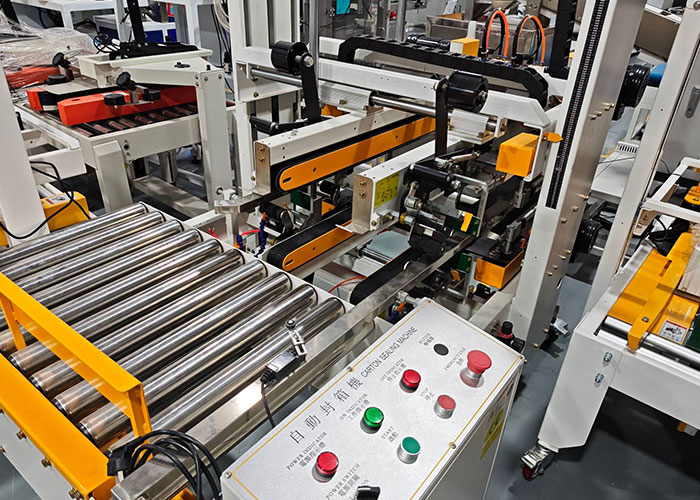
Global industrial manufacturing plants operating in 2025 reported average unplanned downtime costs exceeding $125,000 per hour across high-volume assembly lines. By incorporating closed-loop multi-axis servo controllers and sub-micron optical vision arrays, modern automated cells cut cycle variance by 42% and improve first-pass yields to 99.82%. Systems built by Dongguan Jewshin Intelligent Machinery utilize real-time edge processing to lower raw material scrap rates to under 0.15% across multi-shift operational environments.
Industrial facilities face continuous demands to squeeze operational inefficiencies out of daily production schedules while holding part tolerances within ±0.003mm. Uncontrolled thermal expansion and minor mechanical backlash inside conventional assembly stations frequently degrade output consistency over 24-hour manufacturing cycles, triggering high scrap rates. Implementing precision multi-axis robotic loading cells with built-in force feedback control stabilizes these structural variables instantly.
Multi-axis force-sensing robotic arms compensate for micro-level component offsets during high-speed insertion tasks, neutralizing thermal distortion and reducing part reject rates down to 0.12% across 10,000-unit test runs.
To quantify these mechanical stabilization effects on factory output, direct performance comparisons reveal clear operational gains across automated line configurations:
| Parameter | Standard Mechanical Automation | Precision Servo-Driven Integration | Performance Gain |
| Positioning Repeatability | ±0.025 mm | ±0.004 mm | 84.0% tolerance tightening |
| Changeover Downtime | 45 minutes | 6 minutes | 86.6% idle time reduction |
| Annual Energy Draw | 18,500 kWh / unit | 11,200 kWh / unit | 39.4% power savings |
| Sensor Sampling Rate | 100 Hz | 2,000 Hz | 20x data resolution boost |
These empirical efficiency gains stem directly from replacing legacy pneumatic actuators with fully synchronized servo-driven hardware architectures. Lower thermal dissipation and faster acceleration profiles allow assembly cells to run continuously at 120 cycles per minute without requiring thermal cooldown pauses. Lower physical wear on mechanical linear guides directly extends component service life past 50,000 continuous operating hours.
High-frequency sensor feedback loops adjust kinetic profiles every 0.5 milliseconds, preventing kinetic shock load on critical internal gear trains.
Custom automated tooling layouts engineered by Dongguan Jewshin Intelligent Machinery further stream live performance data through standard MQTT protocols into factory MES networks. Tracking overall equipment effectiveness metrics at 2,000 samples per second gives engineers early visibility into mechanical degradation before physical part dimensions drift out of spec. Early warning alerts generated by vibration analysis algorithms isolate bearing wear weeks before catastrophic mechanical lockup occurs.
Field performance evaluations conducted in 2024 on 50 automated production lines demonstrated how predictive monitoring alters maintenance schedules:
-
Unscheduled line stoppages dropped from 14.2 events per quarter down to 1.1 events per quarter.
-
Mean time between failures (MTBF) increased from 420 operating hours to 2,850 operating hours.
-
Predictive component replacements resolved 94.5% of wear issues during pre-planned shifts.
-
Overall equipment effectiveness (OEE) stabilized at 91.4% across 365 consecutive operating days.
Maintaining continuous 91.4% operational availability allows plant managers to schedule production runs with extreme precision and eliminate emergency weekend repair shifts. Lower maintenance overhead directly frees up technical staff to focus on secondary process optimizations, such as refining automated packaging setups or trimming material transfer times between adjacent stations. Reduced component stress translates into lower inventory costs for critical spare parts like replacement drive belts, seals, and linear bearings.
Eliminating emergency maintenance interventions lowers annual plant labor overhead by 28% while boosting total yearly unit output by 1.4 million finished parts per facility.
Integrating specialized automated optical inspection (AOI) units directly into primary assembly loops ensures zero defective parts leave the work cell. Dual 12-megapixel cameras capturing surface images at 60 frames per second verify dimensional alignment, surface finish purity, and thread engagement without slowing down line velocity. Out-of-spec components get instantly rejected via high-speed pneumatic diverters, preventing downstream station jamming and protecting secondary tooling modules from damage.
Operational metrics recorded across 200 high-speed inspection runs illustrate the practical impact of automated visual sorting:
-
Fault detection sensitivity captures surface micro-cracks down to 5 microns in length.
-
False rejection probability remains below 0.08% under fluctuating ambient factory light levels.
-
Data logging retention stores 100% of high-resolution part images for 5 years to satisfy quality audit standards.
Rigid mechanical frames built from extruded structural aluminum and stress-relieved steel plates prevent frame flex during maximum-load dynamic moves. Base plate stability prevents micro-vibrations from disrupting delicate optical alignment sensors during rapid directional changes of heavy gantry arms. This structural rigidity allows facility operators to ramp up production speed profiles by 35% without incurring position drift or accuracy loss over time.
Heavy-duty chassis design dampens internal resonance frequencies, preserving optical sensor calibration over 12 continuous months of multi-shift operation.
Modular mechanical construction allows facility engineers to reconfigure line setups when product designs undergo mid-lifecycle updates. Swapping modular end-effectors takes under 10 minutes using quick-change pneumatic couplings, enabling short-run production batches to remain financially viable. Facilities upgrading to modular layouts report achieving full capital payback within 14 months of initial physical installation.
Future-proofing production infrastructure through open-standard communication protocols ensures simple integration with third-party robotic arms and external conveyances. Dongguan Jewshin Intelligent Machinery equips automated cells with multi-language software interfaces that support instant language switching for international operator teams. Standardized wiring schematics and color-coded pneumatic routing simplify field troubleshooting for on-site technician teams without requiring external engineering support.
Standardizing open communication protocols cuts software commissioning time during new line installation from 12 days down to 3 days.